Thin-Gauge Stamped Steel and Aluminum Sheet Parts
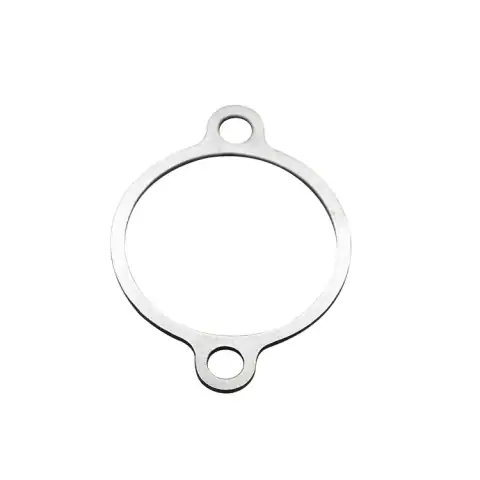
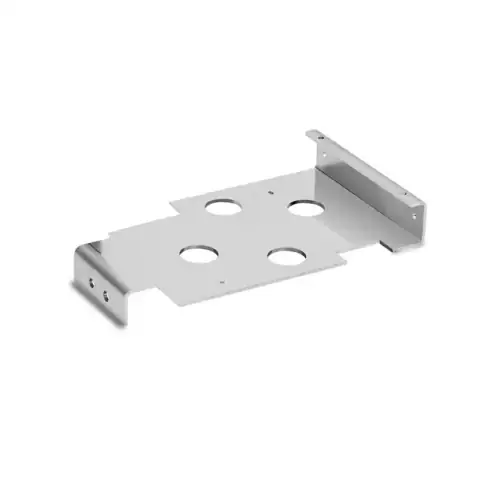
These are thin-gauge stamped sheet parts, such as EMI shields, shims, gaskets, small clips, terminals and washers, in carbon steel, stainless steel and aluminum. Production runs use stamping dies, while samples are laser cut first to prove the design. They suit electronics, appliance and automotive suppliers who need flat or lightly formed parts in high volume with consistent dimensions.
- Material
- Carbon Steel
- Tolerance
- to ±0.005 mm
- MOQ
- 1 piece
- Prototype lead time
- 3–7 days
- Thin-gauge parts held flat with pilots and strippers
- Laser-cut samples before die investment
- Tin, zinc or nickel plating options
- Burr height checked at first article
Item ref. 11000024522092 ·
| Process | Stamping, laser cutting |
|---|---|
| Materials | Cold-rolled steel; stainless steel 301/304; aluminum 1060/5052 |
| Tolerance | Laser-cut profiles typically ±0.1 mm; bends typically ±0.2 mm; machined features ±0.05 mm |
| Surface Finish | Zinc, nickel or tin plating; tumbling; passivation |
| MOQ | 1 piece |
| Drawing Formats | STEP, IGES, X_T, STL, DWG, DXF, PDF |
| Lead Time | Prototypes ~3–7 working days; production typically 10–20 working days |
| Inspection | First-article + 100% critical-dimension inspection; CMM report on request |
| Drawing Formats | DWG, DXF, IGES, STEP, PDF |
Manufacturing
How we make this part
Process, material options and inspection for thin-gauge stamped steel and aluminum sheet parts.
Thin sheet, commonly well under 1 mm, distorts easily, so dies are designed with strippers and pilots that hold the strip flat and register each station. Blanking clearance is set to the thickness to keep burrs small. For samples, fiber laser cutting gives clean edges without tooling, though very thin material may need a fine-cut setup to avoid heat warping. Parts are deburred by tumbling or vibratory finishing.
Cold-rolled steel is economical and is usually zinc or nickel plated for corrosion protection; tin-plated steel is common for EMI shields because it solders easily. Stainless 301 and 304 resist corrosion without coating and come in spring tempers for clips. Aluminum 1060 or 5052 is light and conductive for shims and heat spreaders. Material temper strongly affects formability.
Flatness, burr height and hole positions are checked at first article and monitored during runs with in-process sampling. Thickness is verified against material certificates. Critical characteristics are 100% inspected before shipping. Typical uses include PCB shield cans, battery contacts, precision shims, washers, spring clips, automotive connector clips and appliance hardware.
FAQ
Frequently asked questions
What thickness counts as thin-gauge stamping?
There is no strict cutoff, but parts roughly under 1 mm thick are usually treated as thin-gauge, where flatness and burr control need special die design. We stamp sheet from fractions of a millimeter upward; tell us the thickness and part size so we can confirm the approach.
Can EMI shield cans be soldered to the PCB?
Yes, if the material is solderable. Tin-plated steel and nickel silver are common shield materials because they solder reliably. Bare stainless and aluminum are hard to solder. Specify the soldering method and we will recommend a suitable material and plating.
How do I get a quote for thin-gauge stamped steel and aluminum sheet parts?
Send a 3D model (STEP or IGES) and a 2D drawing with tolerances, material, finish and quantity through the quote form or by email. An engineer replies within 24 hours on business days with price, lead time and any DFM suggestions.
Request a quote
Quote this part
Attach drawings or send several parts at once from the full quote form.
- Email[email protected]
- WhatsApp+86 176 2154 1688
- Phone+86 176 2154 1688
- HoursMon–Sat, 08:30–18:00 China Standard Time (UTC+8)