Welded Stainless Steel Sheet Metal Frames and Stands
These are custom welded frames, equipment stands, support structures and brackets fabricated from stainless steel sheet and tube, with aluminum also available. Parts are laser cut, press-brake bent and TIG welded in fixtures, then brushed, polished or bead-blasted. They suit machine builders, lab-equipment makers and food-processing OEMs needing clean, rigid, corrosion-resistant structures.
- Material
- Stainless Steel
- Tolerance
- to ±0.005 mm
- MOQ
- 1 piece
- Prototype lead time
- 3–7 days
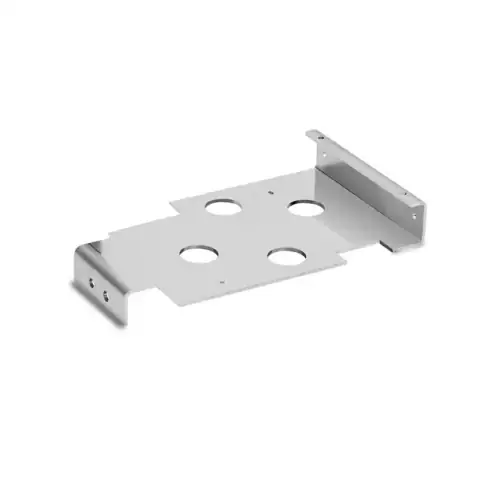
- Tab-and-slot parts self-locate for square welds
- TIG welded, pickled and brushed stainless
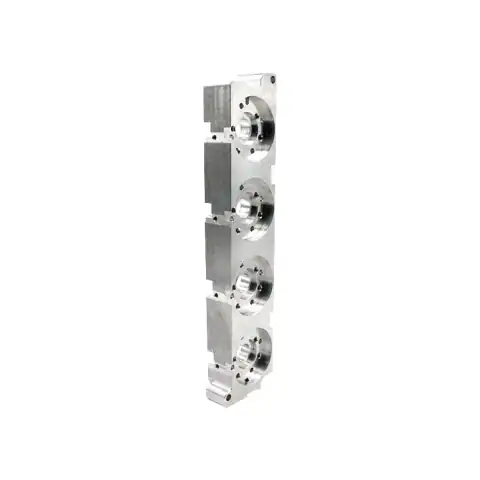
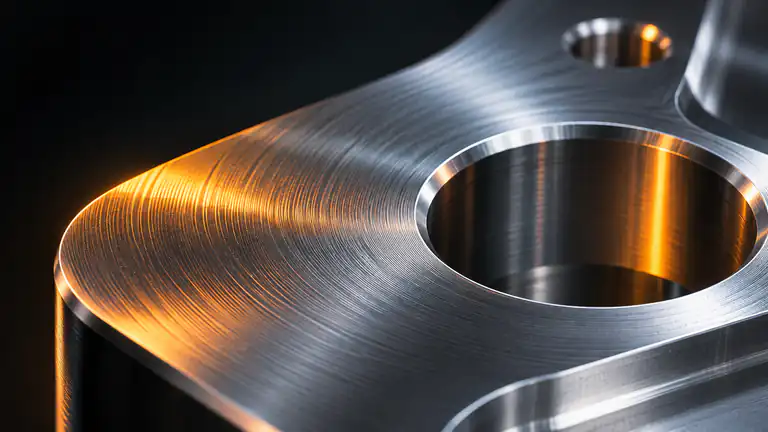
- Post-weld machining for flat mounting faces
- Diagonal checks for frame squareness
Item ref. 11000022636232 ·
| Process | Laser cutting, CNC bending, TIG welding |
|---|---|
| Materials | Stainless steel 304/316; aluminum 5052/6061 |
| Tolerance | Laser-cut profiles typically ±0.1 mm; bends typically ±0.2 mm; machined features ±0.05 mm |
| Surface Finish | Brushing, polishing, bead blasting, passivation, powder coating |
| MOQ | 1 piece |
| Drawing Formats | STEP, IGES, X_T, STL, DWG, DXF, PDF |
| Lead Time | Prototypes ~3–7 working days; production typically 10–20 working days |
| Inspection | First-article + 100% critical-dimension inspection; CMM report on request |
| Drawing Formats | DWG, DXF, IGES, STEP, PDF |
Manufacturing
How we make this part
Process, material options and inspection for welded stainless steel sheet metal frames and stands.
Welded frames start as laser-cut flat parts with tabs and slots that self-locate during assembly, which reduces fixture cost and improves squareness. Bent members add stiffness without extra welds. TIG welding is used on stainless for clean, controlled beads; tack sequences and alternating welds keep heat distortion down. Critical mounting faces can be machined after welding if flatness needs to be tighter than fabrication allows.
304 stainless is the general-purpose choice; 316 is chosen for salt, chlorides or harsher washdown chemicals. Welding discolors stainless and can reduce corrosion resistance in the heat zone, so welds are pickled or passivated and then brushed to blend. Aluminum frames are lighter and can be anodized or powder coated, but aluminum welds are weaker than parent metal, which design loads must account for.
Assembled frames are checked for overall dimensions, diagonals for squareness, and flatness of mounting faces. Welds are visually inspected for full fusion, porosity and undercut. Critical dimensions are 100% inspected before crating. Typical uses include machine bases, conveyor stands, cleanroom equipment frames, laboratory instrument racks and food-equipment supports, shipped assembled or flat-packed.
FAQ
Frequently asked questions
How do you limit distortion on welded stainless frames?
We design tab-and-slot joints so parts locate precisely, clamp them in welding fixtures, tack in a balanced sequence and alternate weld positions to spread heat. Where a mounting face must be very flat, we machine it after welding rather than relying on fabrication alone.
Do welds on stainless steel need extra treatment?
Yes. Welding leaves heat tint and can deplete chromium near the weld, reducing corrosion resistance. Pickling or passivation removes the tint and restores the protective layer. Brushing then blends the appearance. This step is especially important for food, medical and outdoor equipment.
How do I get a quote for welded stainless steel sheet metal frames and stands?
Send a 3D model (STEP or IGES) and a 2D drawing with tolerances, material, finish and quantity through the quote form or by email. An engineer replies within 24 hours on business days with price, lead time and any DFM suggestions.
Request a quote
Quote this part
Attach drawings or send several parts at once from the full quote form.
- Email[email protected]
- WhatsApp+86 176 2154 1688
- Phone+86 176 2154 1688
- HoursMon–Sat, 08:30–18:00 China Standard Time (UTC+8)