Hybrid Mill-Turn Automotive Parts in Steel, Aluminum and POM
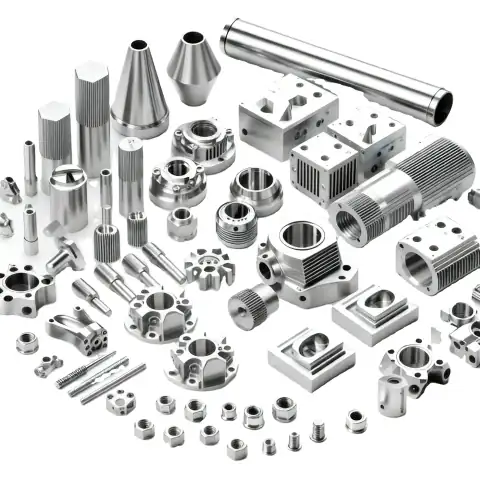
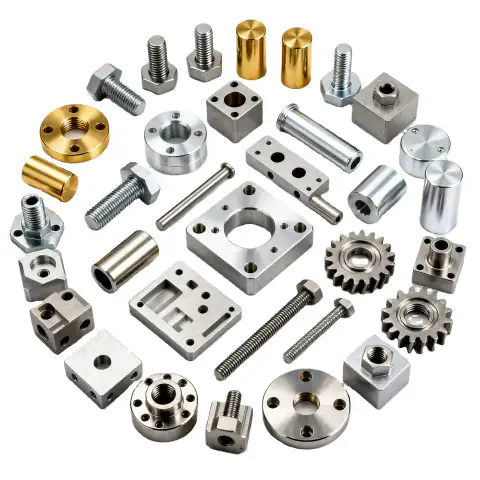
This is a mill-turn machining service for automotive parts that combine round and prismatic features, such as flanged housings, sensor bosses and adjuster knobs. Parts are cut on hybrid machines that turn and mill in one clamping, in metals or engineering plastics. It suits automotive engineers and aftermarket buyers who supply 2D PDF or 3D STEP/IGES drawings and want finished parts, not blanks.
- Material
- Aluminum
- Tolerance
- to ±0.005 mm
- MOQ
- 1 piece
- Prototype lead time
- 3–7 days
- Turned and milled features in one clamping
- Metals plus ABS and POM engineering plastics
- Customer logos laser marked on the part
- 2D PDF or 3D STEP/IGES drawings accepted
Item ref. 1600082875667 ·
| Process | Hybrid mill-turn CNC machining, milling, turning |
|---|---|
| Materials | Steel, alloy steel, aluminum alloys, brass, titanium, ABS, POM |
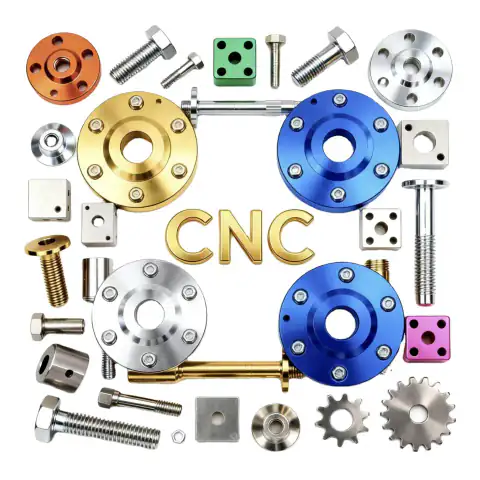
| Surface Finish | Anodizing, plating, painting, powder coating, laser marking |
| Tolerance | ±0.05 mm standard; down to ±0.005 mm on critical features |
| MOQ | 1 piece; prototypes through mid-volume runs |
| Drawing Formats | STEP, IGES, X_T, STL, DWG, DXF, PDF |
| Lead Time | Prototypes typically 3–7 working days; production usually 10–20 |
| Inspection | FAI, in-process checks, 100% critical dimensions; CMM |
Manufacturing
How we make this part
Process, material options and inspection for hybrid mill-turn automotive parts in steel, aluminum and pom.
On a mill-turn machine the part stays in the same chuck while the turret switches between turning tools and driven milling tools. Bores, grooves and threads are turned; flats, slots, cross holes and engraved logos are milled without unclamping. This keeps cross-hole positions concentric to the turned diameter, which is hard to guarantee when parts move between separate lathes and mills.
Steel and alloy steel are used for load-bearing parts, aluminum alloys for light housings, brass for fittings, titanium where weight and corrosion both matter. ABS and POM (Delrin) cover covers, knobs and wear pads; POM has low friction and stays dimensionally stable, while ABS is cheaper and paints well. Finishes range from anodizing and plating to painting, with customer logos laser marked.
Each order starts with a first-article check against the drawing, followed by in-process gauging and 100% inspection of critical features. Drawings are accepted as PDF/CAD 2D or IGES/STEP 3D. Typical parts include shift knobs, adjuster wheels, sensor housings, fuel fittings, bushings and small brackets for cars and light commercial vehicles.
FAQ
Frequently asked questions
What is the benefit of mill-turn machining for automotive parts?
Fewer setups and better feature relationships. Because turned and milled features are cut in one clamping, cross holes, flats and slots stay aligned with the main axis. It also reduces handling time, which lowers cost for parts that would otherwise need a lathe operation followed by one or two milling operations.
Can you machine POM and ABS to the same tolerances as metal?
Close, but plastics move more. POM holds tolerance well and is a good choice for precise plastic parts. ABS and other plastics expand with heat and can relax after machining, so we usually recommend about ±0.05–0.1 mm unless a tighter tolerance is essential, and we machine in stages to limit distortion.
How do I get a quote for hybrid mill-turn automotive parts in steel, aluminum and pom?
Send a 3D model (STEP or IGES) and a 2D drawing with tolerances, material, finish and quantity through the quote form or by email. An engineer replies within 24 hours on business days with price, lead time and any DFM suggestions.
Request a quote
Quote this part
Attach drawings or send several parts at once from the full quote form.
- Email[email protected]
- WhatsApp+86 176 2154 1688
- Phone+86 176 2154 1688
- HoursMon–Sat, 08:30–18:00 China Standard Time (UTC+8)