Broached and Milled Brass and Stainless Steel Auto Parts
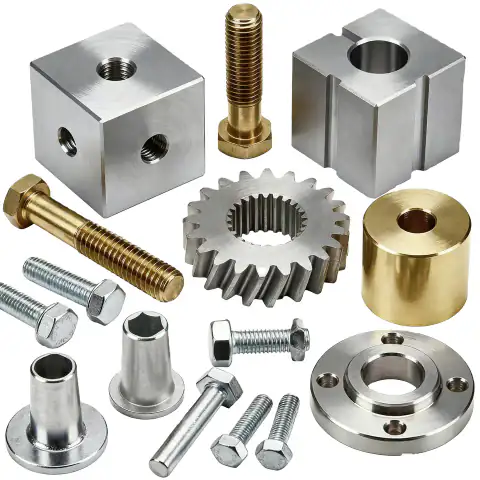
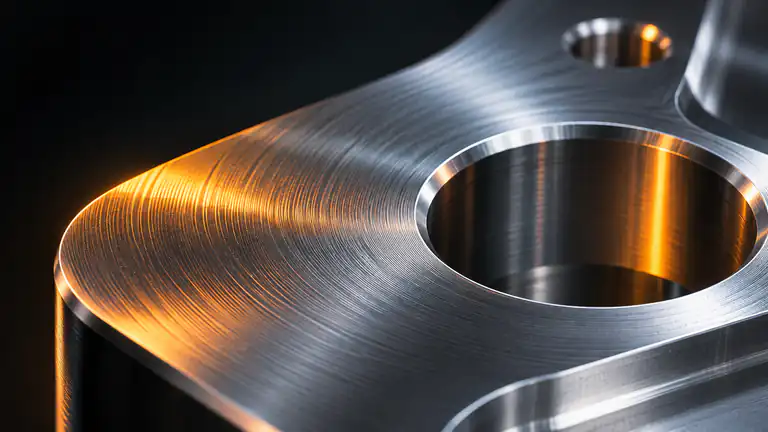
These are automotive parts that need internal profiles such as splines, keyways, hex or square holes, produced by broaching combined with CNC milling and turning. Brass, stainless steel and aluminum are the usual materials. Typical parts are couplers, shift adapters, steering yokes, gear hubs and drive sockets. They suit automotive suppliers and aftermarket brands needing torque-carrying parts to precise internal geometry.
- Material
- Brass
- Tolerance
- to ±0.005 mm
- MOQ
- 1 piece
- Prototype lead time
- 3–7 days
- Internal splines, keyways, hex and square holes
- Rotary broaching for blind hex and Torx-style sockets
- Brass, stainless steel, 4140 steel or aluminum
- Spline fits checked with plug gauges or mating shafts
Item ref. 1600228585755 ·
| Process | Broaching (linear and rotary), CNC milling, CNC turning |
|---|---|
| Materials | Brass C36000, stainless steel 303/304, alloy steel 4140, aluminum 6061/7075 |
| Surface Finish | Anodizing, nickel plating, passivation, black oxide |
| Tolerance | ±0.05 mm standard; down to ±0.005 mm on critical features |
| MOQ | 1 piece; prototypes through mid-volume runs |
| Drawing Formats | STEP, IGES, X_T, STL, DWG, DXF, PDF |
| Lead Time | Prototypes typically 3–7 working days; production usually 10–20 |
| Inspection | FAI, in-process checks, 100% critical dimensions; CMM |
Manufacturing
How we make this part
Process, material options and inspection for broached and milled brass and stainless steel auto parts.
A broach is a long tool with progressively larger teeth; pushed or pulled through a pre-drilled hole, it cuts the full internal profile in one stroke. Keyways are broached in bores after turning, and full splines use matched spline broaches. Rotary broaching on the lathe produces blind hex and Torx-style sockets. Milling then adds flats, cross holes and external details.
Brass broaches cleanly and suits low-torque adapters and fluid fittings; stainless 303 or 304 is used where corrosion resistance and strength matter; 4140 steel handles high-torque splines after heat treatment. Aluminum 6061 or 7075 suits lightweight shift and pedal parts. Finishes include anodizing, nickel plating, passivation and black oxide, chosen so coatings do not tighten the broached fit.
Spline and keyway fits are checked with plug gauges or mating shafts, and broach dimensions over pins are measured where specified. Every lot is inspected on critical features before packing, and inspection reports are available. Typical uses include steering column couplers, shifter adapters, gear hubs, splined spacers, wheel hub adapters, hex drive sockets and sensor drive collars for passenger and commercial vehicles.
FAQ
Frequently asked questions
What is rotary broaching used for?
Rotary broaching cuts polygon shapes such as hex, square or Torx-style sockets in blind holes on a lathe or mill. A tilted broach wobbles as it advances, cutting one corner at a time. It is fast and accurate for small sockets, set screw drives and drive adapters where a through-hole is not possible.
Can broached splines be heat treated afterward?
Yes, but heat treatment can distort the profile slightly. For high-precision splines, we broach to final size in pre-hardened steel, or broach before heat treatment and specify a process with minimal distortion. Tell us the required fit class so we plan the sequence and allowance.
How do I get a quote for broached and milled brass and stainless steel auto parts?
Send a 3D model (STEP or IGES) and a 2D drawing with tolerances, material, finish and quantity through the quote form or by email. An engineer replies within 24 hours on business days with price, lead time and any DFM suggestions.
Request a quote
Quote this part
Attach drawings or send several parts at once from the full quote form.
- Email[email protected]
- WhatsApp+86 176 2154 1688
- Phone+86 176 2154 1688
- HoursMon–Sat, 08:30–18:00 China Standard Time (UTC+8)