CNC Turned Brass Nuts and Stainless Steel Dowel Pins
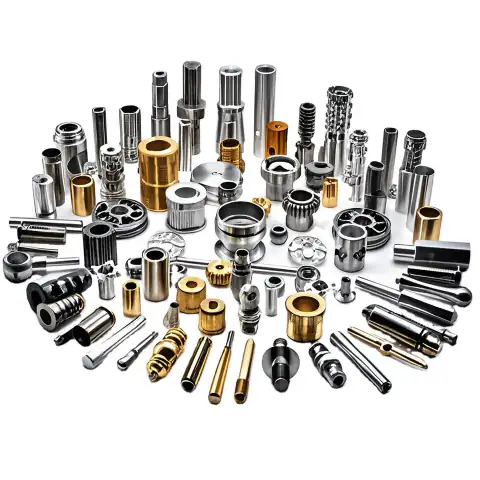
These are small turned fasteners: brass hex and knurled nuts and stainless steel dowel, clevis and pivot pins. They are produced on CNC and Swiss-type style lathes from bar stock, then threaded, grooved and cross drilled as required. They suit assembly and equipment makers who need non-standard sizes, special threads or materials that catalog fasteners do not cover.
- Material
- Brass
- Tolerance
- to ±0.005 mm
- MOQ
- 1 piece
- Prototype lead time
- 3–7 days
- Brass nuts that will not gall on stainless bolts
- Dowel, clevis and pivot pins with clip grooves
- Swiss-type style turning for long slender pins
- Metric, UNC/UNF and special threads
Item ref. 1600394034749 ·
| Process | CNC turning, Swiss-type style turning, threading, cross drilling |
|---|---|
| Materials | Brass C36000, H59; stainless steel 303, 304, 316, 17-4PH |
| Surface Finish | Nickel plating, passivation, polishing |
| Tolerance | ±0.05 mm standard; down to ±0.005 mm on critical features |
| MOQ | 1 piece; prototypes through mid-volume runs |
| Drawing Formats | STEP, IGES, X_T, STL, DWG, DXF, PDF |
| Lead Time | Prototypes typically 3–7 working days; production usually 10–20 |
| Inspection | FAI, in-process checks, 100% critical dimensions; CMM |
Manufacturing
How we make this part
Process, material options and inspection for cnc turned brass nuts and stainless steel dowel pins.
Nuts are turned and drilled, then threaded with taps or single-point tools, and hex or knurl forms are produced in the same cycle. Pins are turned to diameter, chamfered or radiused at the ends, and given grooves for retaining clips or cross holes for cotter pins. Swiss-type style turning supports long, slender pins without deflection.
Brass C36000 or H59 is used for nuts because it machines cleanly, resists corrosion and does not gall against stainless bolts. Stainless 303 machines best for pins, while 304 or 316 offer better corrosion resistance; 17-4PH can be hardened when shear strength is critical. Finishes include nickel plating on brass and passivation or polishing on stainless steel.
Thread fit is checked with plug gauges, and pin diameters with micrometers or pin gauges for press or slip fits. Critical dimensions are inspected before shipping. Common uses are hinge pins, clevis pins for linkages, location dowels for fixtures, brass nuts for electrical terminals and decorative knurled nuts for instruments and furniture.
FAQ
Frequently asked questions
What tolerance can you hold on stainless dowel pin diameters?
Standard turned diameters are held to ±0.05 mm, and critical fit diameters can be held down to about ±0.005 mm depending on size and length. For press fits into reamed holes, state the fit class, such as m6 or h7, and we will machine and gauge to it.
Why use brass nuts with stainless steel bolts?
Stainless on stainless threads can gall, meaning the surfaces cold weld and seize during tightening. Brass is softer and dissimilar, so it runs smoothly on stainless threads and resists corrosion. It is also conductive, which suits electrical terminals. The trade-off is lower strength, so brass nuts suit moderate preloads.
How do I get a quote for cnc turned brass nuts and stainless steel dowel pins?
Send a 3D model (STEP or IGES) and a 2D drawing with tolerances, material, finish and quantity through the quote form or by email. An engineer replies within 24 hours on business days with price, lead time and any DFM suggestions.
Request a quote
Quote this part
Attach drawings or send several parts at once from the full quote form.
- Email[email protected]
- WhatsApp+86 176 2154 1688
- Phone+86 176 2154 1688
- HoursMon–Sat, 08:30–18:00 China Standard Time (UTC+8)