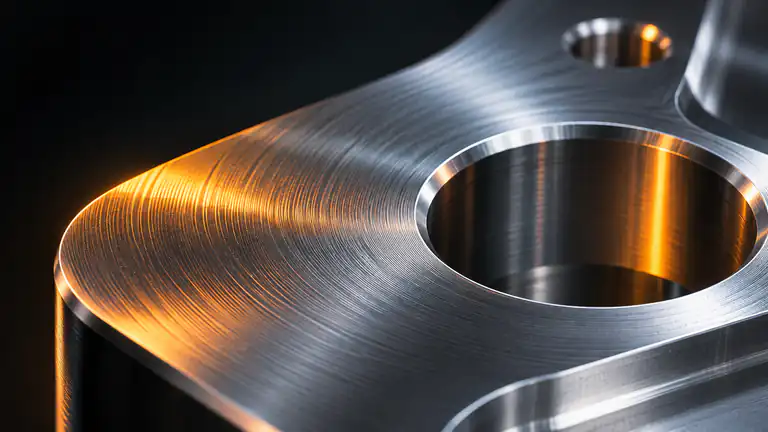
5-Axis CNC Machined Stainless Steel Precision Brackets
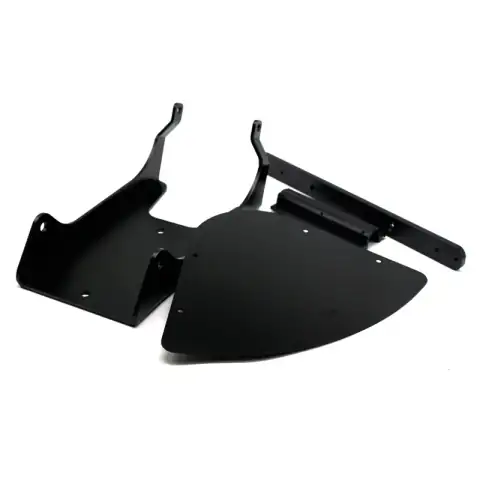
These are precision stainless steel brackets machined on 5-axis CNC centers, including sensor mounts, angled support brackets, clevis brackets and instrument mounting blocks. We cut them from 304, 316 or 17-4PH stainless steel, then passivate or bead blast. They are intended for engineers who need strong, corrosion-resistant brackets with compound angles or features on several faces.
- Material
- Stainless Steel
- Tolerance
- to ±0.005 mm
- MOQ
- 1 piece
- Prototype lead time
- 3–7 days
- Compound-angle stainless brackets from solid
- 304, 316 or hardened 17-4PH options
- Consistent chip load to prevent work hardening
- Bead blasted or polished, then passivated
Item ref. 1601678008323 ·
| Process | 5-axis CNC milling, drilling and tapping |
|---|---|
| Materials | Stainless steel 304, 316, 17-4PH |
| Tolerance | ±0.05 mm standard; down to ±0.005 mm on critical features |
| Surface Finish | Bead blasting, polishing, passivation |
| Typical Parts | Sensor mounts, clevis brackets, mounting blocks |
| MOQ | 1 piece; prototypes through mid-volume |
| Drawing Formats | STEP, IGES, X_T, STL, DWG, DXF, PDF |
| Lead Time | Prototypes typically 3–7 working days; production 10–20 |
| Inspection | First-article, in-process and CMM checks; reports on request |
Manufacturing
How we make this part
Process, material options and inspection for 5-axis cnc machined stainless steel precision brackets.
Stainless steel brackets with angled faces can be fabricated from sheet, but machining from solid is preferred when the bracket must be rigid, carry precise holes or mount sensors at exact angles. Five-axis machining reaches compound angles directly. Stainless steel work-hardens, so we keep tools engaged with consistent chip loads and avoid dwelling, which would harden the surface and shorten tool life.
304 is the general-purpose grade. 316 resists chlorides better for marine or chemical exposure. 17-4PH can be precipitation hardened to roughly 40 HRC for brackets that also act as wear surfaces. Bead blasting gives a uniform satin look; electropolish-type bright finishes are produced by polishing. Passivation is recommended for all machined stainless parts.
Angles between mounting faces and hole positions are measured on a CMM, and threads are gauge-checked. Material certificates showing grade and heat number can be supplied, and critical dimensions are checked on every part. Typical uses include machine vision camera mounts, food-equipment sensor brackets, marine instrument mounts, laboratory fixture brackets and robot tool-changer adapters.
FAQ
Frequently asked questions
Should a stainless bracket be machined or made from sheet metal?
Sheet metal is cheaper for simple, lightly loaded brackets. Machining from solid is better when you need high rigidity, precise hole positions, compound angles or thick sections. We can review your design and quote both options if the geometry allows.
What is the difference between 304 and 17-4PH for brackets?
304 is easier to machine and resists corrosion well but cannot be hardened by heat treatment. 17-4PH is a precipitation-hardening grade that reaches much higher strength and hardness while keeping good corrosion resistance, making it suitable for brackets that see wear or high load.
How do I get a quote for 5-axis cnc machined stainless steel precision brackets?
Send a 3D model (STEP or IGES) and a 2D drawing with tolerances, material, finish and quantity through the quote form or by email. An engineer replies within 24 hours on business days with price, lead time and any DFM suggestions.
Request a quote
Quote this part
Attach drawings or send several parts at once from the full quote form.
- Email[email protected]
- WhatsApp+86 176 2154 1688
- Phone+86 176 2154 1688
- HoursMon–Sat, 08:30–18:00 China Standard Time (UTC+8)