CNC Turn-Mill Aluminum and Stainless Lathe Parts
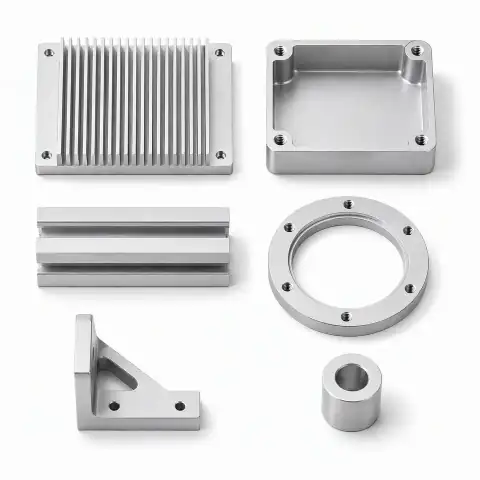
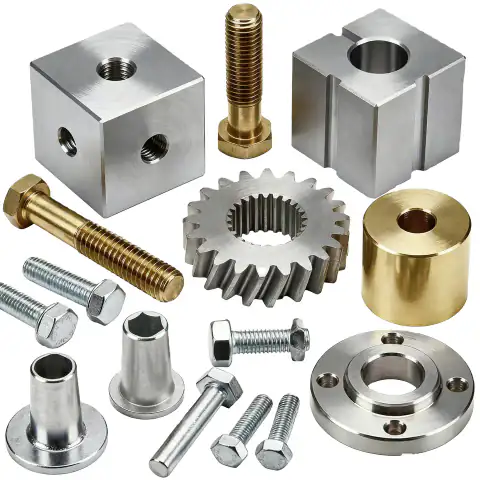
These are lathe parts produced on CNC turn-mill centers in aluminum and stainless steel, such as shafts with flats, flanged bushings, threaded adapters and valve stems with cross holes. Turn-mill machines combine turning and live-tool milling, completing parts in one cycle. Lead times are typically 3–15 working days. The service suits buyers needing complex round parts from one piece.
- Material
- Aluminum
- Tolerance
- to ±0.005 mm
- MOQ
- 1 piece
- Prototype lead time
- 3–7 days
- Turning and live-tool milling in one cycle
- Sub-spindle finishes the back side
- Concentricity and cross-hole position checked
- Typical 3–15 working day lead times
Item ref. 1601504159630 ·
| Process | CNC turn-mill, CNC turning, live-tool milling |
|---|---|
| Materials | Aluminum 6061-T6, 7075-T6; stainless steel 303, 304, 316 |
| Tolerance | ±0.05 mm standard; down to ±0.005 mm on critical features |
| Surface Finish | Anodizing, passivation, polishing, per customer request |
| Lead Time Range | Typically 3–15 working days |
| MOQ | 1 piece; prototypes through mid-volume |
| Drawing Formats | STEP, IGES, X_T, STL, DWG, DXF, PDF |
| Lead Time | Prototypes typically 3–7 working days; production 10–20 |
| Inspection | First-article, in-process and CMM checks; reports on request |
Manufacturing
How we make this part
Process, material options and inspection for cnc turn-mill aluminum and stainless lathe parts.
A conventional route for a shaft with a keyway and cross hole might involve a lathe, then a mill, then a drill press. On a turn-mill center, the part is turned, then the spindle indexes while live tools mill flats, drill cross holes and cut slots, often with a sub-spindle finishing the back. Fewer handling steps mean better concentricity and fewer chances for error.
Aluminum 6061-T6 and 7075-T6 are fast to machine and light, suited to adapters and knobs. Stainless steel 303 machines easily; 304 and 316 handle corrosion. Free-machining 303 is often the fastest choice for complex turn-mill parts, but it is less suitable for welding. Finishes such as anodizing, passivation and polishing are applied as specified on the drawing.
Concentricity, cross-hole position and thread fit are checked on the first article and on critical features of every part. Inspection uses CMM, height gauges and thread gauges, and a first-article report is available before the batch is released. Typical uses include pump shafts with flats, threaded adapters, flanged bushings, valve stems, sensor bodies and motor shafts for automation and appliances.
FAQ
Frequently asked questions
What is the advantage of turn-mill machining?
Turn-mill completes turned and milled features in one setup, so flats, cross holes and slots stay accurately positioned relative to the turned diameters. It also reduces handling and lead time, which is especially useful for small batches and complex round parts.
Do you need 2D drawings as well as 3D models?
3D models in STEP or IGES define geometry, but 2D PDF or CAD drawings are still important for tolerances, threads, finishes and critical notes. Sending both gives the most accurate quote and avoids assumptions about which dimensions are critical.
How do I get a quote for cnc turn-mill aluminum and stainless lathe parts?
Send a 3D model (STEP or IGES) and a 2D drawing with tolerances, material, finish and quantity through the quote form or by email. An engineer replies within 24 hours on business days with price, lead time and any DFM suggestions.

Request a quote
Quote this part
Attach drawings or send several parts at once from the full quote form.
- Email[email protected]
- WhatsApp+86 176 2154 1688
- Phone+86 176 2154 1688
- HoursMon–Sat, 08:30–18:00 China Standard Time (UTC+8)