CNC Turned Brass and Aluminum Electronic Connector Parts
These are turned components for electrical and RF connectors: connector bodies, coupling nuts, contact pins, insulator housings and adapter shells. Brass and aluminum are the main materials, with stainless steel for rugged connectors. Fine threads, precise bores and concentric diameters are turned on CNC and Swiss-type style lathes. They suit connector designers and cable assembly makers.
- Material
- Brass
- Tolerance
- to ±0.005 mm
- MOQ
- 1 piece
- Prototype lead time
- 3–7 days
- Concentric bodies and pins from Swiss-type turning
- Fine-pitch coupling nut threads single-point cut
- Brass, aluminum, stainless and contact alloys
- PTFE, PEEK and POM insulators machined
Item ref. 10000038590116 ·
| Process | CNC turning, Swiss-type style turning, slitting, knurling |
|---|---|
| Materials | Brass C36000, aluminum 6061, stainless steel 303, PTFE, PEEK, POM |
| Surface Finish | Nickel plating, tin plating, color anodizing, passivation |
| Tolerance | ±0.05 mm standard; down to ±0.005 mm on critical features |
| MOQ | 1 piece; prototypes through mid-volume runs |
| Drawing Formats | STEP, IGES, X_T, STL, DWG, DXF, PDF |
| Lead Time | Prototypes typically 3–7 working days; production usually 10–20 |
| Inspection | FAI, in-process checks, 100% critical dimensions; CMM |
Manufacturing
How we make this part
Process, material options and inspection for cnc turned brass and aluminum electronic connector parts.
Connector parts are small and need concentric diameters for proper mating. Swiss-type style lathes machine slender pins and shells in one cycle with tight diameter control. Fine-pitch threads on coupling nuts are single-point cut for accurate pitch diameter. Knurls give grip on coupling nuts, and slots for spring fingers are cut by slitting saws or micro end mills.
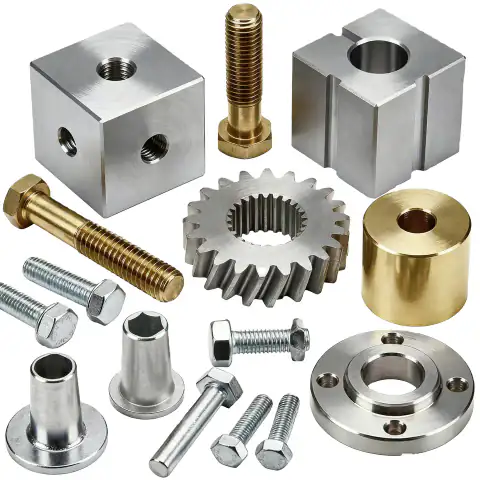
Brass C36000 is the default for bodies and pins because it machines cleanly and conducts well; beryllium copper or phosphor bronze is used where spring contacts are needed. Aluminum suits lightweight military-style shells and can be anodized in color codes. Nickel, tin and gold-type plating protect contacts. Plastic insulators can be machined from PTFE, PEEK or POM.
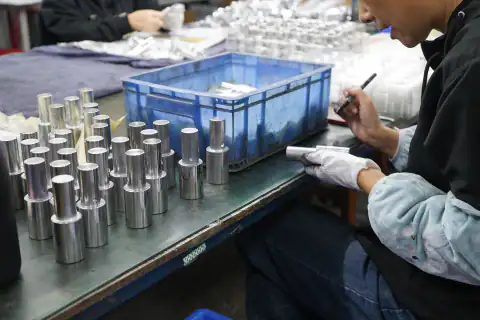
Diameters, thread fit and concentricity are measured with micrometers, thread gauges and optical comparators, and plating thickness is checked on samples. Every lot is inspected on critical dimensions before packing. Typical parts include RF connector bodies, circular connector shells, coupling nuts, contact pins and sockets, cable glands and adapter bodies for industrial and telecom equipment.
FAQ
Frequently asked questions
Can you machine PTFE insulators for RF connectors?
Yes. PTFE is soft and moves with temperature, so we machine it with sharp tools and low clamping force and recommend tolerances around ±0.05 mm for small features. For tighter tolerances or higher stiffness, PEEK or other engineering plastics may be better.
What concentricity can you hold on connector bodies?
For parts turned complete in one setup on Swiss-type or CNC lathes, concentricity between outer diameter and bore of about 0.01–0.02 mm is typical, and tighter is possible on small parts. Specify concentricity or runout on the drawing for critical mating diameters.
How do I get a quote for cnc turned brass and aluminum electronic connector parts?
Send a 3D model (STEP or IGES) and a 2D drawing with tolerances, material, finish and quantity through the quote form or by email. An engineer replies within 24 hours on business days with price, lead time and any DFM suggestions.
Request a quote
Quote this part
Attach drawings or send several parts at once from the full quote form.
- Email[email protected]
- WhatsApp+86 176 2154 1688
- Phone+86 176 2154 1688
- HoursMon–Sat, 08:30–18:00 China Standard Time (UTC+8)