CNC Turned Copper and Brass Hardware Accessories
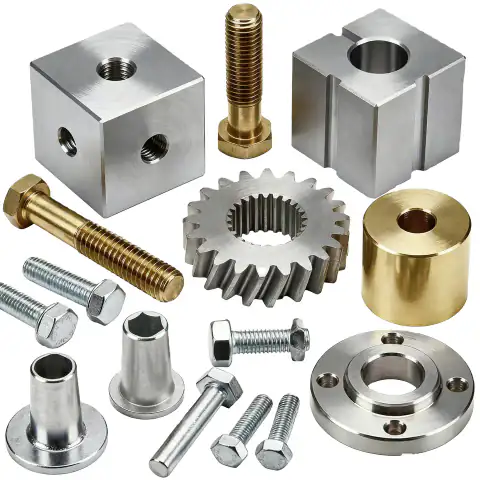
These are copper and brass hardware accessories, including electrical terminals, bushings, threaded inserts, decorative caps and fittings. They are CNC turned and milled from C11000 copper, C36000 brass and similar alloys, then plated or polished. They suit electrical, hardware and furniture manufacturers who need conductive or decorative small parts with precise threads, bores and shoulders.
- Material
- Copper
- Tolerance
- to ±0.005 mm
- MOQ
- 1 piece
- Prototype lead time
- 3–7 days
- C11000 copper for high electrical conductivity
- C36000 brass for fast, clean threaded parts
- Nickel, chrome or tin plating against tarnish
- Knurled, polished or plated decorative finishes
Item ref. 1601695266324 ·
| Process | CNC turning, live-tool milling, knurling, tapping |
|---|---|
| Materials | Copper C11000, brass C36000/H59/H62, bronze |
| Surface Finish | Nickel, chrome or tin plating, polishing, lacquering |
| Tolerance | ±0.05 mm standard; down to ±0.005 mm on critical features |
| MOQ | 1 piece; prototypes through mid-volume runs |
| Drawing Formats | STEP, IGES, X_T, STL, DWG, DXF, PDF |
| Lead Time | Prototypes typically 3–7 working days; production usually 10–20 |
| Inspection | FAI, in-process checks, 100% critical dimensions; CMM |
Manufacturing
How we make this part
Process, material options and inspection for cnc turned copper and brass hardware accessories.
Brass is turned at high speeds with sharp tools and produces short chips, so complex profiles finish quickly with fine surfaces. Copper is softer and gummy; it needs positive-rake tools, steady coolant and care to avoid burrs on edges and threads. Cross holes, slots and flats are milled with live tools, and knurls are rolled or cut for grip.
Pure copper C11000 conducts about 100% IACS and is chosen for terminals and busbar connectors. Brass conducts less but is stronger, cheaper to machine and suits threaded hardware. Bronze can replace brass for bearing bushings. Nickel, chrome, tin or silver-style plating protects copper alloys from tarnish; polished and lacquered brass is common for visible decorative pieces.
Thread fit, bore size and shoulder lengths are checked during production and critical features before packing. Surfaces on decorative parts are inspected visually for scratches and dents. Typical uses include battery and grounding terminals, cable lugs, brass inserts for plastics, lamp fittings, furniture caps, knurled thumb nuts and bushings in small mechanisms.
FAQ
Frequently asked questions
Copper or brass for electrical terminals?
Choose copper when conductivity is the priority, such as high-current terminals and busbar connectors. Brass has roughly a quarter to a third of copper's conductivity but is stronger and much easier to machine, so it suits low-current terminals and threaded contacts. Tin or nickel plating improves contact reliability on both.
How do you prevent burrs on machined copper parts?
Copper tends to smear rather than cut cleanly. We use sharp, polished, positive-rake tools, appropriate speeds and coolant, and add chamfers where edges allow. Remaining burrs are removed by hand, tumbling or brushing depending on part size. Threads are cleaned and gauged after deburring.
How do I get a quote for cnc turned copper and brass hardware accessories?
Send a 3D model (STEP or IGES) and a 2D drawing with tolerances, material, finish and quantity through the quote form or by email. An engineer replies within 24 hours on business days with price, lead time and any DFM suggestions.
Request a quote
Quote this part
Attach drawings or send several parts at once from the full quote form.
- Email[email protected]
- WhatsApp+86 176 2154 1688
- Phone+86 176 2154 1688
- HoursMon–Sat, 08:30–18:00 China Standard Time (UTC+8)