CNC Turned Stainless Steel Appliance Shafts and Spindles
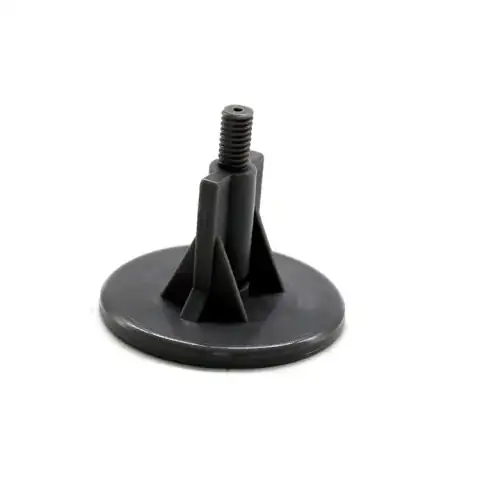
These are stainless steel shafts, spindles and drive pins for household appliances such as blenders, juicers, fans, washing machines and coffee machines. They are CNC turned from 303, 304 or 416 bar with flats, threads, splines and bearing journals, then ground or polished where needed. They suit appliance engineers needing corrosion-resistant rotating parts that run quietly and last.
- Material
- Stainless Steel
- Tolerance
- to ±0.005 mm
- MOQ
- 1 piece
- Prototype lead time
- 3–7 days
- Journals ground or fine turned for quiet running
- D-flats, slots and splines in one setup
- 303, 304, 416 or 420 stainless
- Straightness and runout checked every lot
Item ref. 1600620693417 ·
| Process | CNC turning, Swiss-type style turning, centerless grinding, milling |
|---|---|
| Materials | Stainless steel 303, 304, 416, 420 |
| Surface Finish | Passivation, oxidation, polishing |
| Journal Finish | Typically Ra 0.4–0.8 µm |
| Tolerance | ±0.05 mm standard; down to ±0.005 mm on critical features |
| MOQ | 1 piece; prototypes through mid-volume runs |
| Drawing Formats | STEP, IGES, X_T, STL, DWG, DXF, PDF |
| Lead Time | Prototypes typically 3–7 working days; production usually 10–20 |
| Inspection | FAI, in-process checks, 100% critical dimensions; CMM |
Manufacturing
How we make this part
Process, material options and inspection for cnc turned stainless steel appliance shafts and spindles.
Shafts are turned on CNC lathes or Swiss-type style machines for long slender sizes, keeping journals concentric. D-flats and drive slots are milled with live tools, and splines are rolled or cut. Journals that run in bearings or bushings are finished by fine turning or centerless grinding to tight diameters and low roughness, which reduces noise and wear.
303 stainless machines easily and suits most dry appliance shafts. 304 handles food contact and moisture better, and 416 or 420 can be hardened for wear. Stainless shafts are passivated or oxidized for a uniform surface. Where shafts run in plastic bearings, a smooth finish around Ra 0.4–0.8 µm extends life. Ends are chamfered for easy assembly.
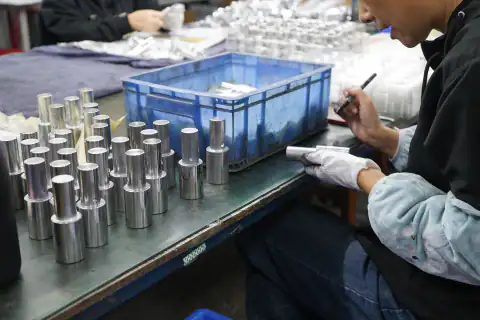
Diameters, straightness and runout are measured on every lot, and hardness is checked on heat-treated shafts. Critical dimensions are inspected before shipment. Typical products include blender drive shafts, juicer spindles, fan motor shafts, washing machine pins, coffee grinder spindles, robot vacuum axles and small gear shafts for kitchen, laundry and cleaning appliance makers.
FAQ
Frequently asked questions
Which stainless steel should I choose for an appliance shaft?
Use 303 for dry, low-load shafts where low machining cost matters. Choose 304 for food contact and wet environments. For shafts that need wear resistance or high strength, 416 or 420 can be hardened. We can recommend a grade based on load, speed and environment.
How straight can long slender shafts be made?
Straightness depends on diameter and length, but Swiss-type style turning and centerless grinding keep slender shafts straight within tight limits, often a few hundredths of a millimeter over typical appliance lengths. Specify straightness or total runout on the drawing so it is measured.
How do I get a quote for cnc turned stainless steel appliance shafts and spindles?
Send a 3D model (STEP or IGES) and a 2D drawing with tolerances, material, finish and quantity through the quote form or by email. An engineer replies within 24 hours on business days with price, lead time and any DFM suggestions.
Request a quote
Quote this part
Attach drawings or send several parts at once from the full quote form.
- Email[email protected]
- WhatsApp+86 176 2154 1688
- Phone+86 176 2154 1688
- HoursMon–Sat, 08:30–18:00 China Standard Time (UTC+8)