Automotive
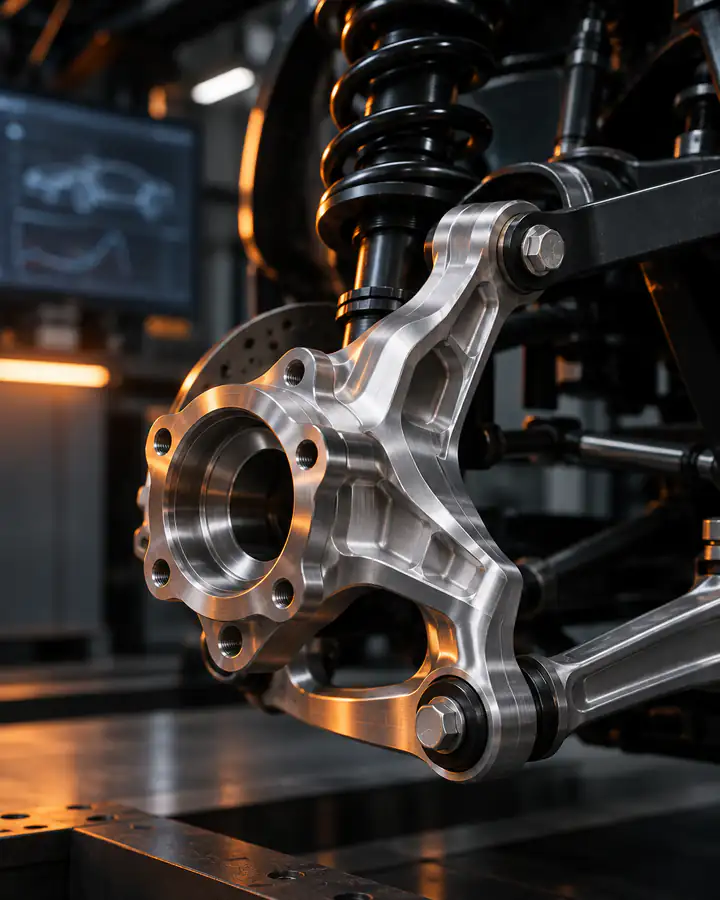
5-Axis Machined Suspension Knuckle Prototypes in 7075-T6
A chassis development team needed suspension knuckles machined from billet so they could test a new geometry before committing to forging tools.
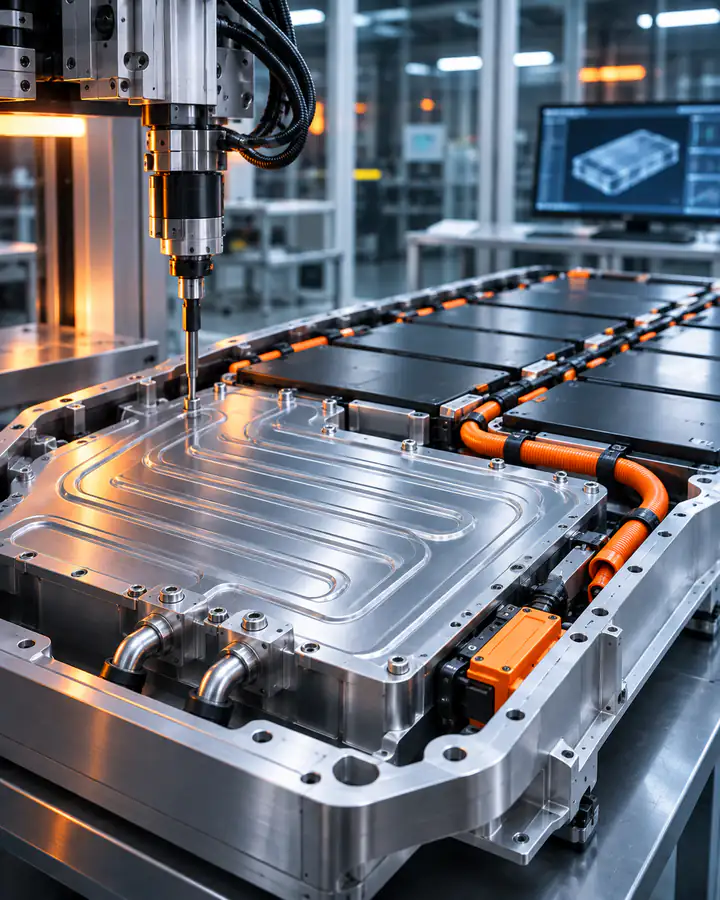
An energy-storage customer needed a liquid-cooled battery plate and its matching housing machined from solid 6061-T6 for a prototype pack. The program centered on keeping a large sealing face flat after heavy material removal and holding the coolant channel and O-ring groove geometry that the seal depends on.
A battery cooling plate is a thermal part and a sealing part at the same time. Coolant runs through milled channels under a bolted cover, and the joint is sealed by an O-ring sitting in a groove on a large flat face. If that face bows, the seal loses compression in some areas and the pack can leak.
The drawing called for:
The difficulty is that more than half of the stock is removed. Rolled aluminum plate carries residual stress, and when the channels are opened up that stress is released and the part moves. Clamping hard to hold it flat only hides the distortion until the part is unclamped.
Our process route was built around controlling distortion rather than fighting it at the last operation.
The housing followed the same rough-rest-finish logic, with its mounting bosses finished in one setup to keep hole positions consistent with the plate.
The inspection plan was agreed with the customer's engineer before the first article was cut.
Material certificates for the plate stock were supplied with the shipment, along with the first-article report and the dimensional report for each serial-numbered part.
We delivered the prototype plates and housings, followed by a pilot run built to the same process route without changes to fixturing or toolpaths. Each shipment included:
Leak and pressure testing of the assembled pack was performed by the customer on their own test rig. The documented process route, fixtures and inspection plan are kept on file so the part can move to low-volume production on the same basis.
Rolled aluminum plate contains residual stress. When deep channels and pockets remove a large share of the material, that stress is released and the plate bows. Roughing both sides, letting the part rest, and finishing on a vacuum fixture keeps flatness under control.
Usually it is masked. Type II anodize adds roughly 5–25 µm of coating, part of which grows outward, and that changes groove depth and seal compression. Masking keeps the sealing geometry exactly as machined.
A chassis development team needed suspension knuckles machined from billet so they could test a new geometry before committing to forging tools.
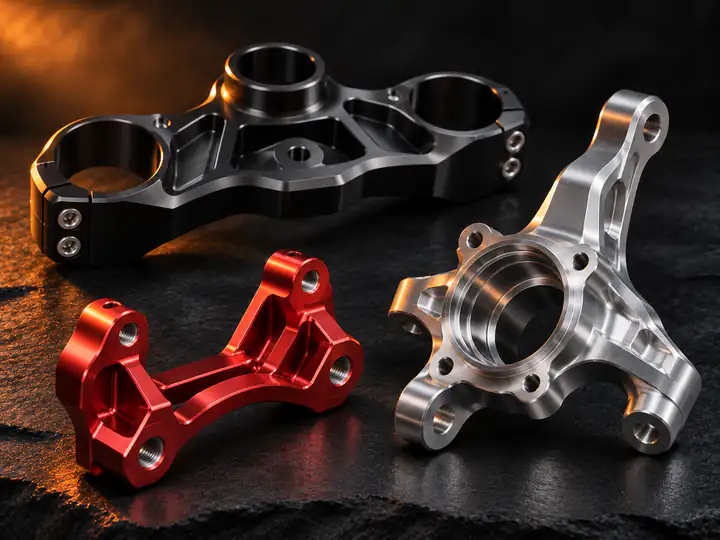
A cycling and powersports components customer needed a handlebar stem and a rear-suspension linkage machined from 7075-T6 for a new product line.
Similar part?
Send your drawing and we’ll reply with a process plan and quote.